


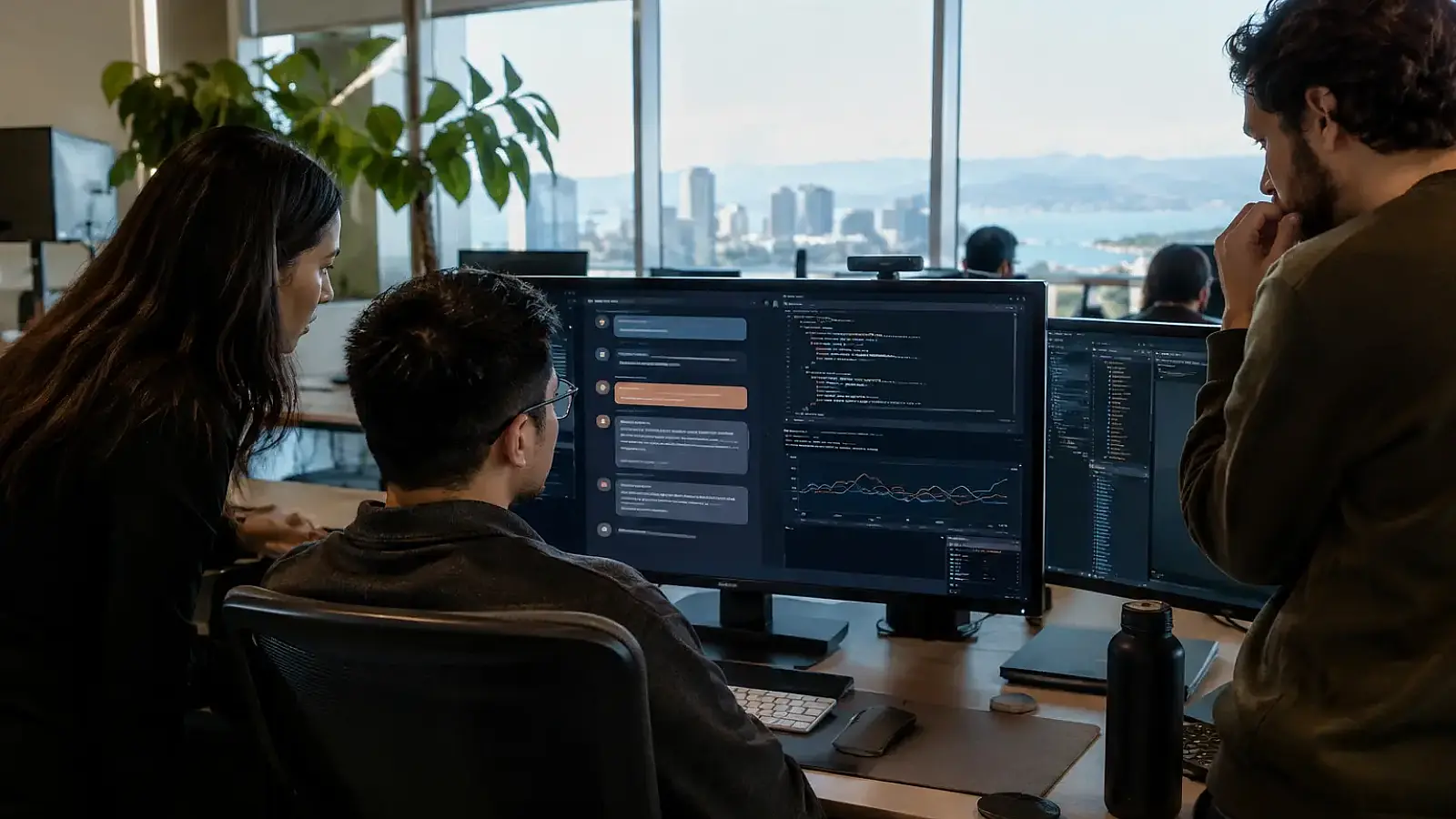
Anthropic says its Claude model now leads more than a quarter of the company’s research and development work on AI models—a sign that the systems built by frontier labs are increasingly helping to create their own successors, though still under human supervision.
The company reported that Claude “leads” 26% of its model research and development, meaning it can complete most of a task from a high-level prompt, while people continue to oversee the work. Anthropic also said about 90% of its research and development involves some form of collaboration with Claude, including work in which researchers direct the model through substantial parts of a task.
You may also like





The figures are not a claim that Claude independently designs or trains the next model. Anthropic’s distinction between leading a task and collaborating on one matters: the former describes a larger role for the system, but neither measure means the company has handed over control of its research program.
A measure of AI’s growing role inside the lab
Anthropic, the San Francisco-based company led by CEO Dario Amodei, presented the numbers as part of an effort to track how AI is changing the pace of AI development. The company said it intends to publish measures regularly and called on other developers to share comparable figures, so researchers and the public can follow changes across time and, potentially, across labs.
The announcement offers a glimpse into a work pattern that is easy to overlook in discussions focused on public-facing chatbots. Models can assist with coding, analysis and other tasks involved in research and engineering; in some cases, they can take on a larger task from a broad instruction. That can help human teams move faster, but it also makes the degree of human direction and review an important part of understanding what the numbers mean.
Anthropic’s headline percentages should therefore be read as company-reported indicators, not as a standardized industry benchmark. The 26% figure refers to tasks the company classifies as being led by Claude, while the 90% figure covers a broader category of collaboration. Without a shared definition and comparable reporting from other labs, those numbers cannot establish that Anthropic’s systems are more autonomous than rivals’ or measure precisely how much faster development has become.
Why the distinction matters
The development connects two debates that are often treated separately: how quickly AI capabilities are advancing, and how well people can monitor and govern the systems doing the work. Anthropic warned that models helping accelerate their own development could make it harder for humans to understand or control them. It framed public measurement as one way to reduce the gap between what frontier labs know and what the public can assess.
Amodei and other prominent figures in the field have also called for slowing AI development over safety concerns. Against that backdrop, disclosure about the models’ role in research is more than an operational detail. If AI systems become increasingly useful in the work of building and testing future systems, independent observers will want to know what tasks they perform, how much human oversight remains and whether the same measures are applied consistently.
Anthropic’s release does not, on its own, demonstrate that a model can autonomously build a successor. That more expansive idea—often described as recursive self-improvement—would require a system to carry out the process with substantially less human guidance. The company’s own account instead describes Claude as working within a supervised research process.
What to watch next
The useful takeaway is not simply that AI is “building itself.” It is that a leading AI developer says its model already takes the lead on a meaningful share of internal research tasks, while humans remain involved in the broader process. Whether that shift increases the speed of development, changes the kinds of work researchers can pursue or raises new safety challenges will depend on details the headline percentages do not answer.
Anthropic’s call for regular reporting sets a test for the industry: whether competitors publish comparable, clearly defined measures—and whether those disclosures explain how human review works in practice. Until then, the figures are an important signal of how one lab says its workflow is changing, not proof that AI development has become autonomous.
Source: Associated Press — apnews.com/article/anthropic-claude-ai-model-self-improvemen...








Comments
0 comment