



A wildly popular science fiction genre in the 20th century, hard sci-fi has seen a resurgence thanks to recent pop culture sensations like The Martian by Andy Weir. Following its publication in 2011, Ridley Scott's successful adaptation starring Matt Damon revived interest in mainstream hard science fiction and increased audience demand for sci-fi with more scientifically plausible storytelling.
Inspired by works published during the Golden Age of Science Fiction from the 1930s to 1960s, which focused on idea-driven plots with plausible technical detail, the contemporary equivalent has shifted towards character-driven narratives. While still exploring speculative elements, the best hard science fiction novels are grounded in realistic scientific accuracy that seamlessly integrates with the emotional character arcs of their logical, problem-solving protagonists.
1 Delta-V Highlights a Plausible Near-Future Techno Thriller
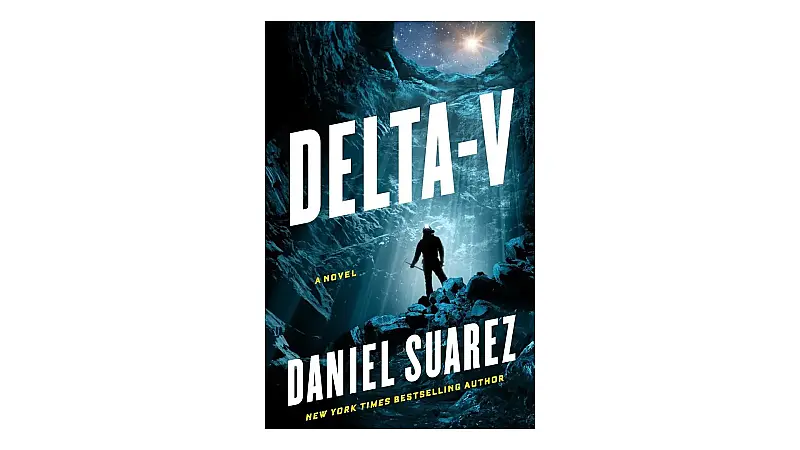
Published in 2019, Daniel Suarez's Delta-V is the first in a hard sci-fi meets techno-thriller trilogy where a billionaire recruits a crew of cave divers, BASE jumpers, mountain climbers, ex-soldiers, and former astronauts to mine a near-Earth asteroid and jump-start a commercial space economy. Set in the near-future of 2032, the series relies on extrapolative spaceflight technology similar to current real-world private ventures rather than futuristic faster-than-light travel.
In addition to emphasizing the actual scientific requirements needed to travel to and mine an asteroid, it also delves deep into the harsh physical realities and psychological isolation of a multi-year deep-space mission. While Delta-V is grounded in rigorous orbital mechanics and cis-lunar physics, the plot is structured like a high-stakes corporate thriller driven by a billionaire's grandiose vision of space colonization.
2 Alien Clay Blends Biopunk Body Horror & Dystopian Politics
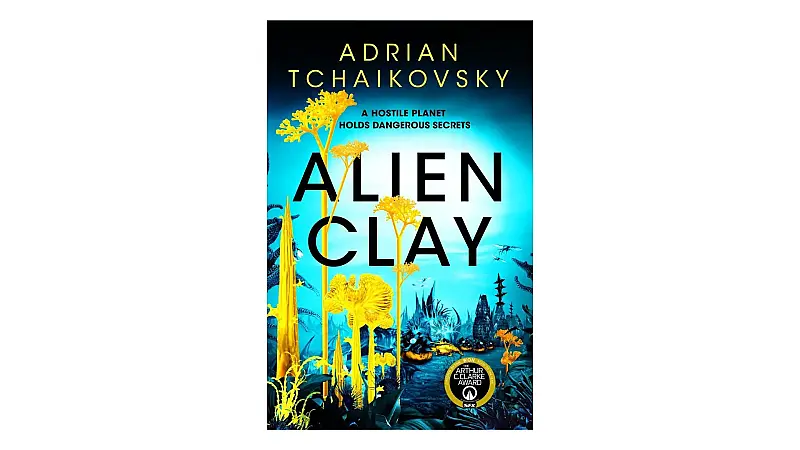
Considered one of the most critically acclaimed sci-fi books of the 2020s, Alien Clay is a fast-paced standalone Hugo Award-nominated novel by science fiction author Adrian Tchaikovsky — best known for his Children of Time series. This gritty survival story follows xenobiologist and activist Arton Daghdev, whose rebellion against a fascist government results in exile to a labor camp on Kiln — a hostile alien planet with a shifting, parasitic ecosystem.
Built around a rigorous thought experiment about non-Darwinian, symbiotic alien ecosystems, Alien Clay features unique astrobiology, ecology, and evolutionary biochemistry. Using scientific methods, observations, and deductions, readers are able to see Kiln through the scientific inquiry of its academic protagonist. Blending dystopian political thriller, survival fiction, and body horror, Tchaikovsky uses speculative alien biology as a direct metaphor for authoritarian control.
3 Eversion Deceives Audiences As a "Historical Adventure"
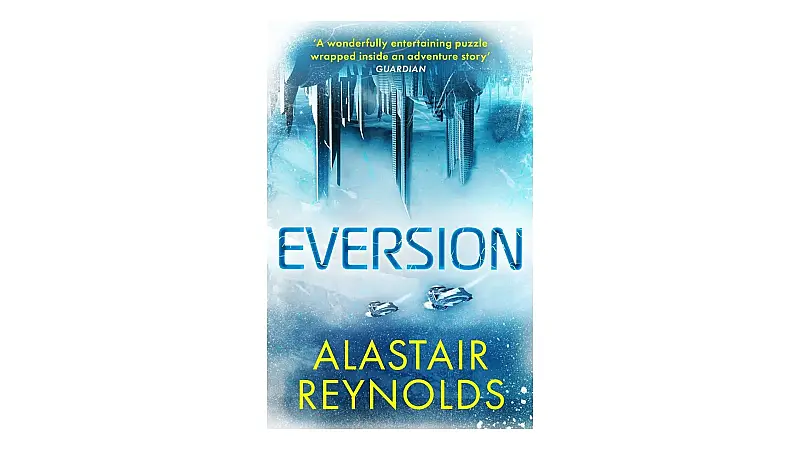
Written by a former astrophysicist and one of the genre's leading hard sci-fi and space opera authors, Alastair Reynolds' Eversion is a mind-bending hard sci-fi novel disguised as gothic historical fiction. Following a recurring cast of characters on a series of doomed expeditions from a sailing ship in the 1800s to the far future, Dr. Silas Coade is tasked with keeping his crew alive as they journey to find a mysterious artifact called the Edifice.
Detailing the meticulous mechanics of 19th-century sailing vessels, Antarctic zeppelins, and futuristic propulsion systems, Reynolds grounds physical environments in plausible engineering and mathematics. Using the first-person narrative of the crew's physician who gradually remembers more of their Groundhog Day-like experiences, Eversion blends scientific rigor and relativistic physics concepts with cosmic horror and existential mysteries.
4 Semiosis Speculates a Planet With a Sentient Eco-System
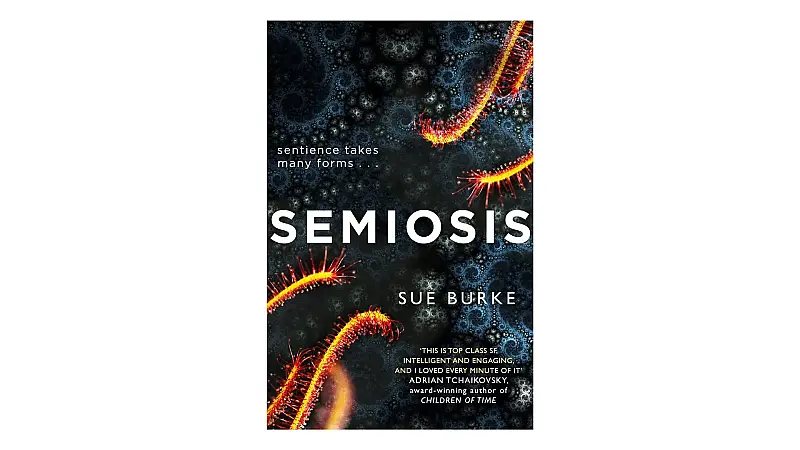
Considered one of the best first contact books, Sue Burke's debut 2018 novel, Semiosis, follows human colonists who arrive on Pax, a lush alien planet, and must learn to survive and coexist alongside a sentient ecosystem of conscious plant life. A character-driven meditation on anthropology, the narrative analyzes the sociological and anthropological factors in a slow-growing relationship between the planet's biosphere and multiple generations of colonists.
Grounding social science fiction with real-life botany and speculative evolutionary biology, Semiosis examines how a low-tech colony realistically solves problems regarding agriculture, toxicology, genetics, and interspecies communication. With the central premise that lifeforms on Pax are built on RNA rather than DNA, Burke drives a first-contact narrative by asking how sentient plants in an alien environment would function and interact with humans.
5 Upgrade's Thriller Elements Are Grounded in Gene Editing
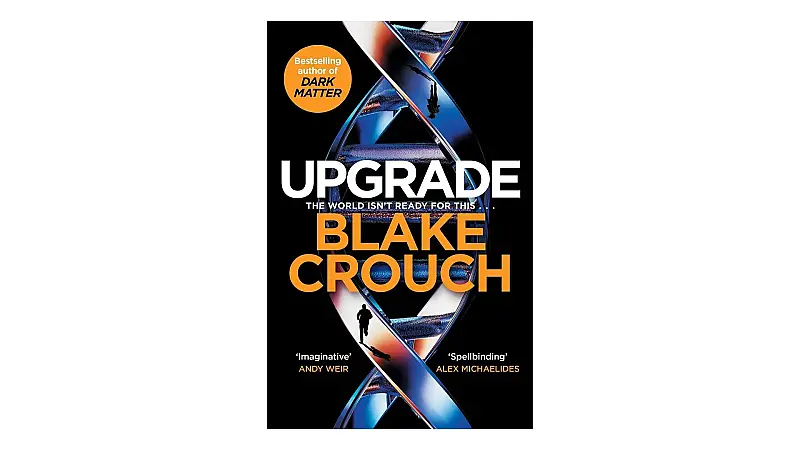
Published in 2022, Upgrade by Blake Crouch is a near-future hard sci-fi thriller set in a world haunted by a past genetic catastrophe engineered by a pioneering scientist that resulted in the deaths of 200 million people. With genetic modification strictly outlawed, the Gene Protection Agency hunts down illegal biotech — which includes the novel's protagonist, Logan Ramsay, who is exposed to an unknown substance that rewires his genome.
Leaning towards an action-packed, high-octane techno-thriller, Upgrade explores plausible scientific concepts like CRISPR gene editing, neurology, cognitive hacking, and artificial human evolution. Consulting with a molecular geneticist, Crouch uses speculative sci-fi ideas as a vehicle to examine ethics, human nature, and sociopolitical consequences while still prioritizing high-stakes suspense and relentless momentum over dense scientific accuracy.
6 The Ministry for the Future Is a Critically Acclaimed Cli-Fi
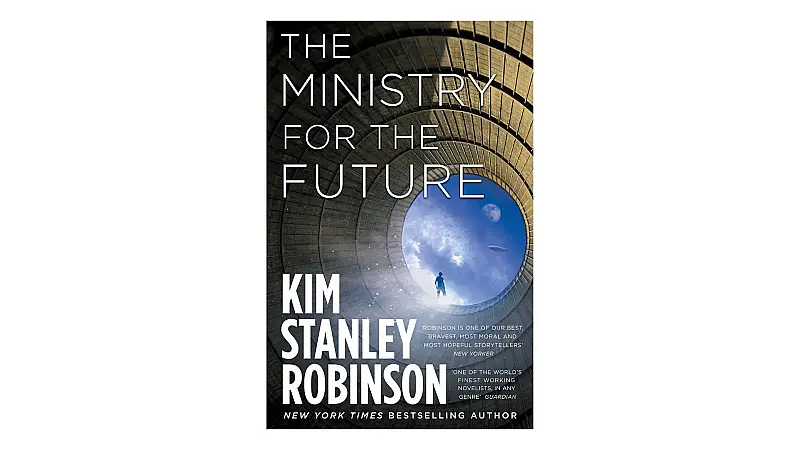
Regarded as one of the greatest cli-fi novels of all time, The Ministry for the Future by Kim Stanley Robinson is a 2020 climate fiction book that envisions the highly realistic and terrifying near-future of cataclysmic climate change. Triggered by a deadly heatwave that kills 20 million people, the UN creates an agency to advocate for future generations as humanity tackles global warming through politics, economics, and radical action.
A master of hard sci-fi, Robinson is well-known for applying in-depth research into math, physics, economics, and glaciology behind his sci-fi plots to align with contemporary scientific consensus. Examining radical financial reforms to extralegal dirty ops, the novel blends disturbing speculative futures with an optimistic vision of large-scale cooperation to ensure humanity's survival.
Focusing on scientific accuracy, it is told through a sprawling, experimental mix of conventional narratives, eyewitness accounts, historical summaries, and philosophical essays. While differing from traditional hard sci-fi, The Ministry for the Future focuses heavily on scientifically plausible solutions and dives into realistic near-future engineering, economics, and policy concepts — including geoengineering and incentivizing decarbonization.
7 The Calculating Stars Explore a Scientific Alternate History
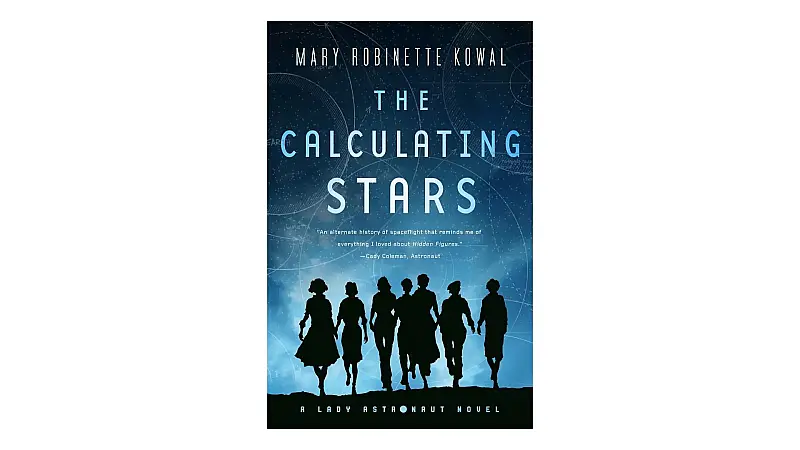
Published in 2018, Mary Robinette Kowal's The Calculating Stars is a Nebula, Hugo, and Locus Award-winning alternate history novel that blends technical realism with social themes. After a massive meteorite strikes the US East Coast in 1952 and triggers a greenhouse effect that will render Earth uninhabitable within decades, global powers must unite to fast-track a space program with the urgent goal of colonizing the Moon and Mars.
Centering on female scientists who manually compute flight trajectories on paper, the novel explores female solidarity and women's representation in STEM and aerospace sectors. Through focusing on Elma York, a gifted mathematician, physicist, pilot, and computer, The Calculating Stars addresses the systemic misogyny, racial injustice, and stigmatization of mental illness that were rife in the 1950s as she campaigns to open astronaut training to qualified women.
Emphasizing the real-world logistics of 1950s spaceflight and orbital mechanics, it dives deep into the technical hurdles of building an emergency space program, the operational constraints of early rocketry, and the climate dynamics following a planetary catastrophe. Unlike traditional engineering-heavy hard sci-fi, this character-driven novel considers the institutional politics of an alternate history as global unity replaces the Cold War in an effort to save humanity.
8 The Bobiverse Combines Theoretical Physics and Comedy
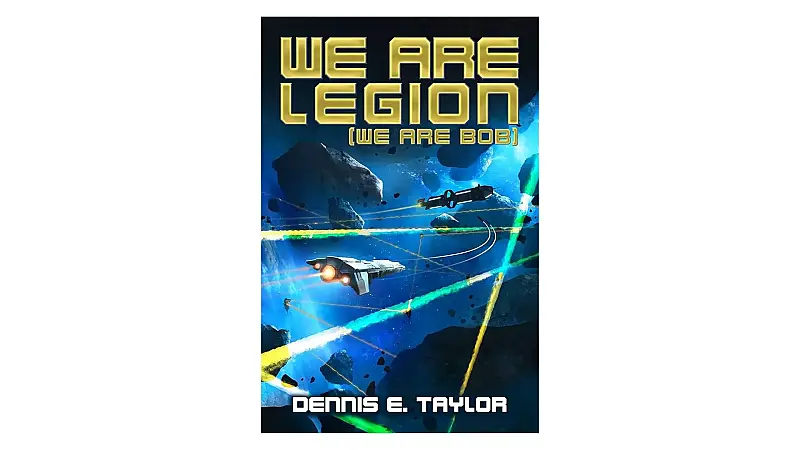
One of the greatest sci-fi books of the last decade, We Are Legion (We Are Bob) by Dennis E. Taylor is a "light" hard sci-fi novel with a fun, accessible tone. The first novel in the Bobiverse follows the titular software engineer who wakes up 117 years in the future after signing up to have his brain cryogenically frozen. As a "corpsicle" with no rights, Bob is uploaded as an AI inside a self-replicating spacecraft designed to explore the galaxy and find a new home for humanity.
Centering on Von Neumann probes, the plot requires realistic technical problem-solving like resource management, 3D printing, interstellar travel constraints, light-speed communication delays, and orbital mechanics to ground its speculative concepts of mind-uploading. Often compared to the works of Andy Weir, the Bobiverse relies on light-hearted humor and geeky pop culture references over strict scientific accuracy to prioritize a fast-paced adventure.
9 To Be Taught If Fortunate Is a Character-Focused Hard Sci-Fi
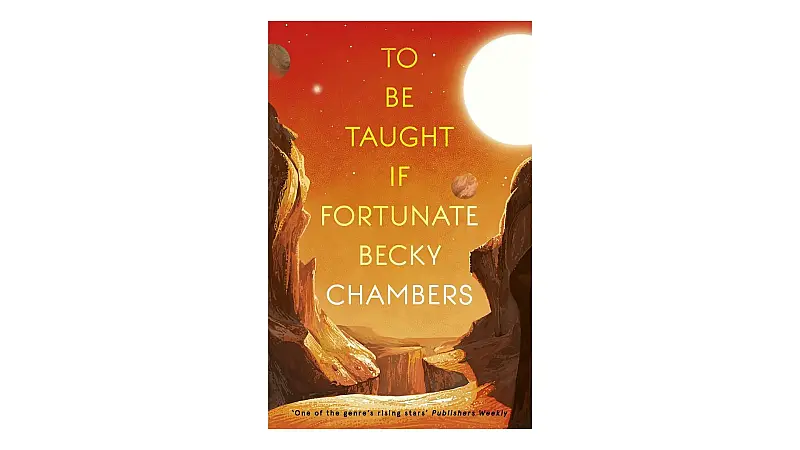
From acclaimed science fiction writer Becky Chambers, To Be Taught, If Fortunate is a 2019 hopepunk hard sci-fi novella set in the 22nd century that follows four astronauts on a long-term research mission to survey alien life and habitable worlds 15 light-years from Earth. Using a quote from the Voyager Golden Record, the title itself speaks to Chambers' approach to speculative astrobiology and soft-leaning hard sci-fi focus.
Detailing biological and ecological surveys of exoplanets in a red dwarf system, the novella also deals with the real constraints and extreme psychological toll of long-term space travel and the isolation of returning to a drastically different Earth. Exploring biotransformation and gene-editing, Chambers develops "somaforming," where the crew adapts their DNA while kept in suspended animation between star systems to suit various harsh alien environments.
Chambers takes a cozy sci-fi approach and focuses on deeply personal, emotional, and gentle storytelling by centering on the crew's relationships rather than technical detail and fast-paced action. Exploring the cosmos out of pure wonder and a desire to learn and connect, To Be Taught If Fortunate is a character-driven novella that uses plausible science for positive change, radical empathy, and communal cooperation.
10 Project Hail Mary Has Become a Hard Sci-Fi Sensation
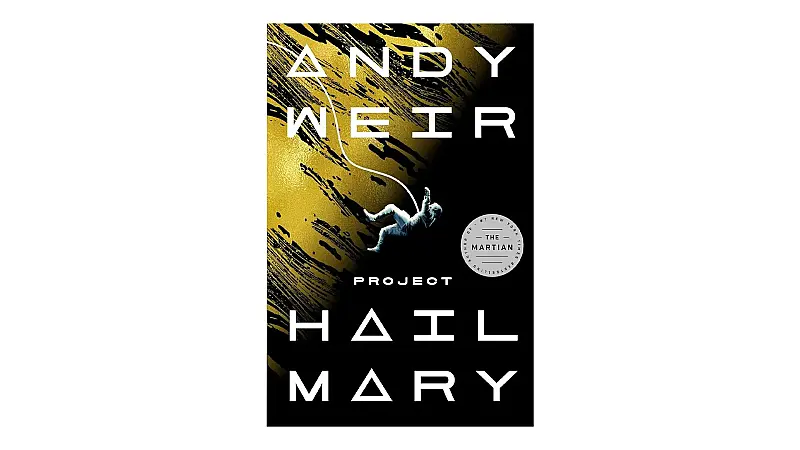
Adapted into a critically acclaimed 2026 blockbuster starring Ryan Gosling, Andy Weir's Project Hail Mary is considered one of the greatest sci-fi books of the 2020s. When science teacher and former biologist Ryland Grace wakes up alone on a starship, he must piece together his memories in time to save Earth from an extinction-level event that threatens to plunge the world into a catastrophic ice age.
Though it walks a fine line between speculative and hard sci-fi, the book is grounded in rigorous scientific method and features a logical, problem-solving protagonist who uses real physics, chemistry, biology, and mathematics to survive. Similar to Weir's debut novel, The Martian, it dives deep into step-by-step engineering and detailed technical explanations.
Reflecting real scientific principles, the novel respects the laws of physics regarding time dilation, relativity, mass-energy mechanics, and orbital mechanics. While the entire plot relies on a fictional, energy-eating microbial MacGuffin called "Astrophage" and features speculative alien biology beyond current scientific understanding, Project Hail Mary finds a middle ground by balancing a "leap of faith" premise with realistic scientific processes.










Comments
0 comment