


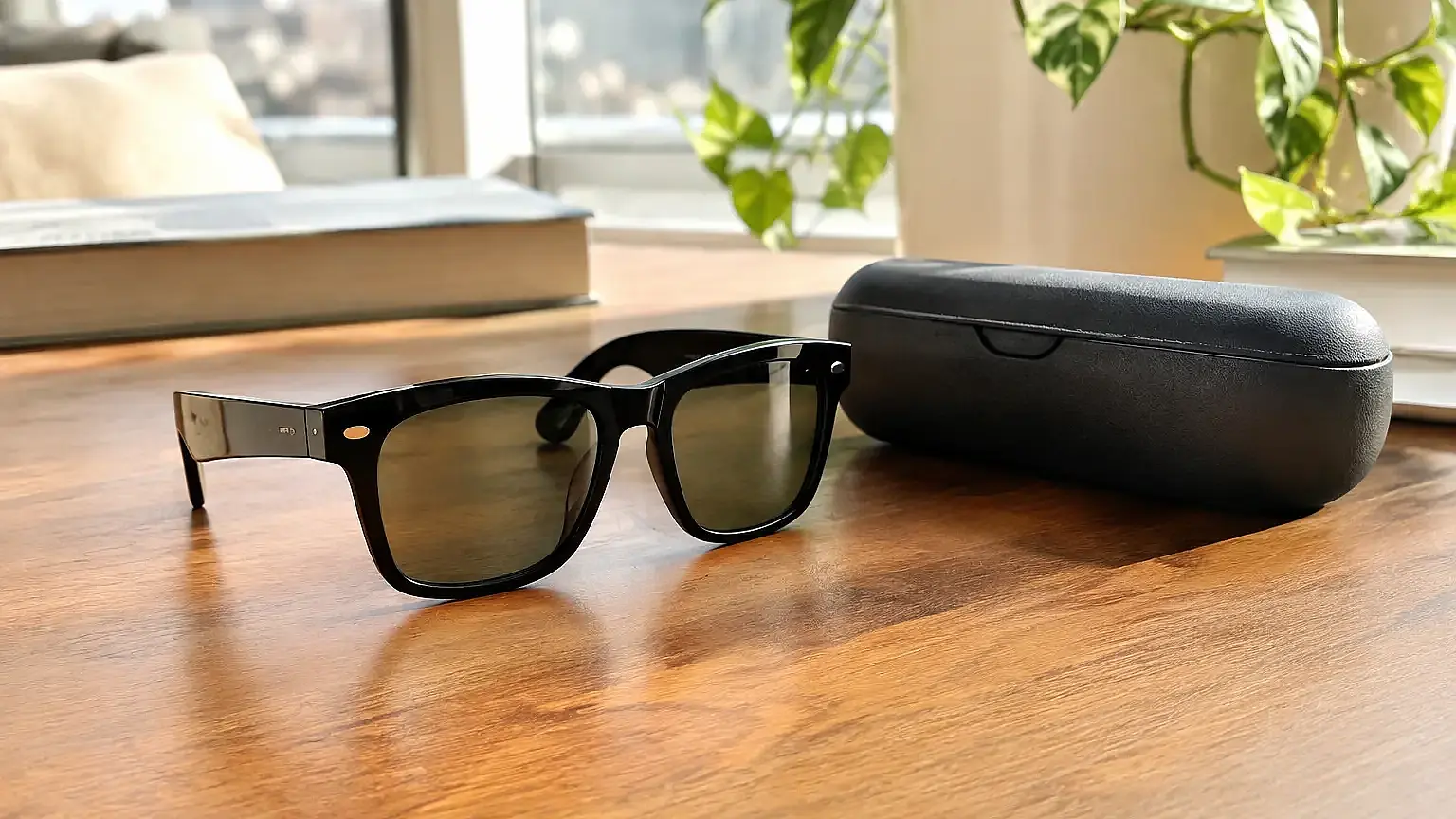
Ray-Ban Meta Audio puts hands-free listening first

Ray-Ban Meta Audio takes a different route into wearable technology: the glasses leave out the camera and concentrate on music, calls and voice-based AI. Announced by Meta on September 23, 2026, the audio-only frames start at $349 in the United States and are scheduled to ship October 13. For shoppers curious about smart glasses but uneasy about wearing a camera, that omission is the main point.
A camera-free alternative
Meta says the glasses weigh 43 grams and offer up to 12 hours of use on a charge, with up to 48 additional hours from the included charging case. They are designed for listening to music and podcasts, taking calls and speaking to Meta’s AI assistant without holding a phone. The open-ear speakers let the wearer hear audio while remaining aware of nearby sounds, rather than sealing the ears like conventional earbuds.
The design choice also draws a clear line between this model and Meta’s camera-equipped glasses. Ray-Ban Meta Audio does not record photos or video, according to the company’s announcement. That makes it a more limited device for capturing moments, but it also avoids the visible recording function that can complicate social situations. It does not, by itself, answer every privacy question: the glasses still use microphones for calls and voice interaction.
What buyers get for $349
The first release comes in two frame styles, Clubmaster and Burbank, with 23 color and lens combinations. Meta says both styles support a wide range of prescription lenses. The company also describes adjustable or replaceable nose pads, professionally adjustable temple tips and overextension hinges, details aimed at fit and comfort during extended wear.
Those are company-provided specifications, not an independent assessment of comfort, sound quality or battery life. Real-world results can vary with listening volume and how often people use calls or AI features. The practical test will be whether the open-ear sound is clear enough for everyday use, especially in noisy places, and whether the frames feel comfortable after hours of wear.
At $349, the glasses cost more than many basic earbuds, while combining eyewear, audio and voice controls. They may appeal to people who already want Ray-Ban frames and prefer not to wear earbuds. They are less compelling for anyone seeking a camera, a screen or a full replacement for a phone. Meta has not described this model as a display device.
AI without reaching for a phone
Meta presents hands-free access to its AI assistant as part of the everyday appeal. The company’s broader glasses lineup is intended to support practical tasks such as getting information and translating conversations. But the announcement does not establish that every feature is available in every region, language or situation. Buyers should check local feature support before treating AI access as a deciding factor.
The bigger consumer-tech question is whether people want an assistant built into ordinary-looking eyewear, rather than another app on a phone. Voice interaction can be useful when hands are occupied, but speaking to a device in public may not suit everyone. And because these glasses have no display, responses rely on audio rather than visual prompts.
When they make sense
Ray-Ban Meta Audio is a focused bet, not an all-purpose wearable. It gives listeners an alternative to earbuds, adds hands-free calls and offers voice access to Meta AI, while deliberately leaving out image and video capture. That could make the product easier to wear around other people than camera-equipped smart glasses, though it does not remove the need to be mindful of microphones.
The takeaway for shoppers is to decide whether the glasses’ combination of open-ear audio, familiar eyewear styles and voice assistance fits a real daily routine. Meta lists a starting price of $349 and a planned October 13 shipping date. Until independent reviews test the sound, comfort and battery claims, the most concrete benefit is also the simplest: listening and talking hands-free, without a camera on your face.















Comments
0 comment