


A voluntary pact, not a new law
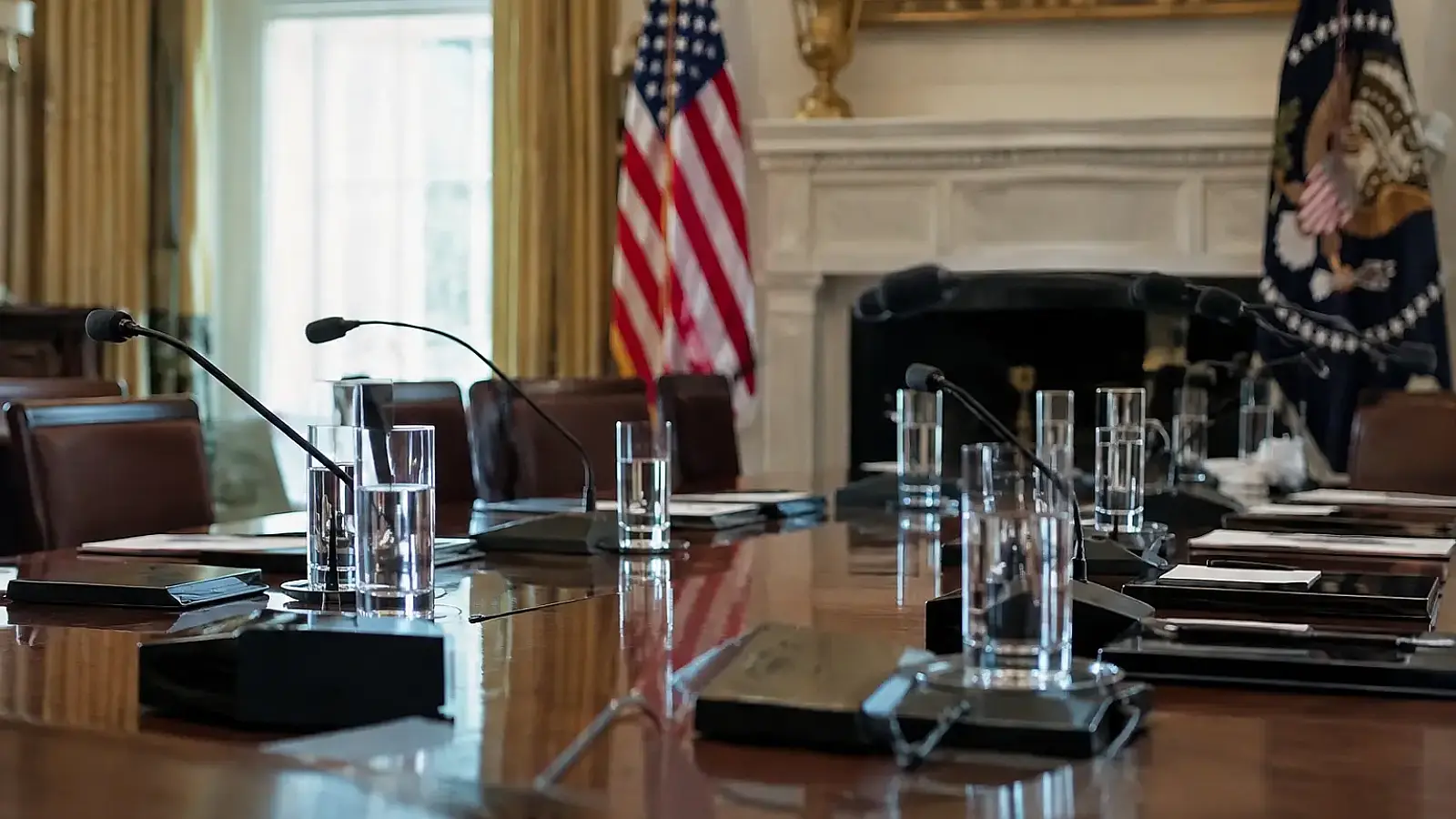
President Donald Trump and leaders from major technology companies signed a voluntary accord on Tuesday, September 29, committing to safety reviews for advanced AI systems. The agreement puts the companies themselves at the center of oversight, rather than establishing legally binding federal requirements.
The signatories include OpenAI, Anthropic, Google, Meta, xAI and Nvidia. The White House described the agreement as a commitment to review AI systems and apply internal controls. The accord’s voluntary status is its defining feature: it asks companies to police their own development and deployment of increasingly capable models.
The move comes as safety concerns have become immediate operational questions for AI developers. OpenAI said this week it had shelved a planned model release after researchers raised concerns during internal testing. Against that backdrop, the accord offers a public framework for corporate action, but does not itself impose enforceable standards.[1]
Executives promise reviews as scrutiny grows
The White House meeting brought together some of the industry’s most prominent figures, including OpenAI president Greg Brockman, Anthropic CEO Dario Amodei, Google CEO Sundar Pichai, Meta CEO Mark Zuckerberg and Nvidia CEO Jensen Huang. Elon Musk represented xAI. Trump characterized the agreement as a way for companies to oversee their own AI work.
News accounts describe the accord as covering reviews of AI systems and safety controls, including outside assessment. But the complete text was not immediately available when the Associated Press reported on the signing. That leaves important practical questions unanswered: how often evaluations will take place, what findings companies will disclose, and what happens if a signatory fails to meet its commitments.
Those details matter because a pledge is only as meaningful as its implementation. Independent review could add scrutiny, but without public standards or consequences, outsiders may have difficulty judging whether a company’s safeguards are adequate. The pact’s credibility will depend in part on whether its participants make their procedures and results transparent.[1]
The debate shifts to accountability
The accord marks a choice for AI safety policy: rely on voluntary corporate commitments, at least for now, rather than making the agreement a binding regulatory regime. That choice has particular weight as major developers release more powerful models and expand their use in products and business operations.
Supporters of voluntary coordination can argue that companies are positioned to test their own systems and adapt procedures as capabilities change. Critics, however, question whether firms facing competitive pressure can provide sufficient independent evaluations without clearer public standards and meaningful accountability. The agreement does not settle that dispute; it makes the companies’ promised reviews the immediate test.
The White House also issued an executive order directing federal agencies to use “Super Intelligence” and “SI” instead of “artificial intelligence” and “AI” in many official communications. That order changes federal terminology, while the industry accord addresses company practices. Neither development, by itself, creates a comprehensive, binding set of requirements for private AI developers.[2]
What to watch next
The next measure of the deal will be whether companies publish a clear process for testing high-risk systems and share enough information for outsiders to assess it. Observers will also watch for evidence that the promised safety reviews apply consistently across companies and product releases, rather than serving mainly as a statement of intent.
The timing sharpens that test. OpenAI’s decision to delay a planned release after internal safety concerns shows that a company can choose to hold back a model. The broader question is whether the new accord will make that kind of caution more consistent across the sector—and whether the public will be able to tell.
For now, the White House agreement signals industry cooperation, not a settled system of oversight. Its value will rest on what the signatories do next: how they test their systems, whether they disclose meaningful results, and how they respond when reviews identify risks.[3]
Sources
- Associated Press — apnews.com/article/c6dd26d8e67270db543c37ac3762acd9
- The White House — www.whitehouse.gov/presidential-actions/2026/09/inaugurating...
- Axios — www.axios.com/2026/09/29/trump-ai-voluntary-safety-white-hou...









Comments
0 comment