


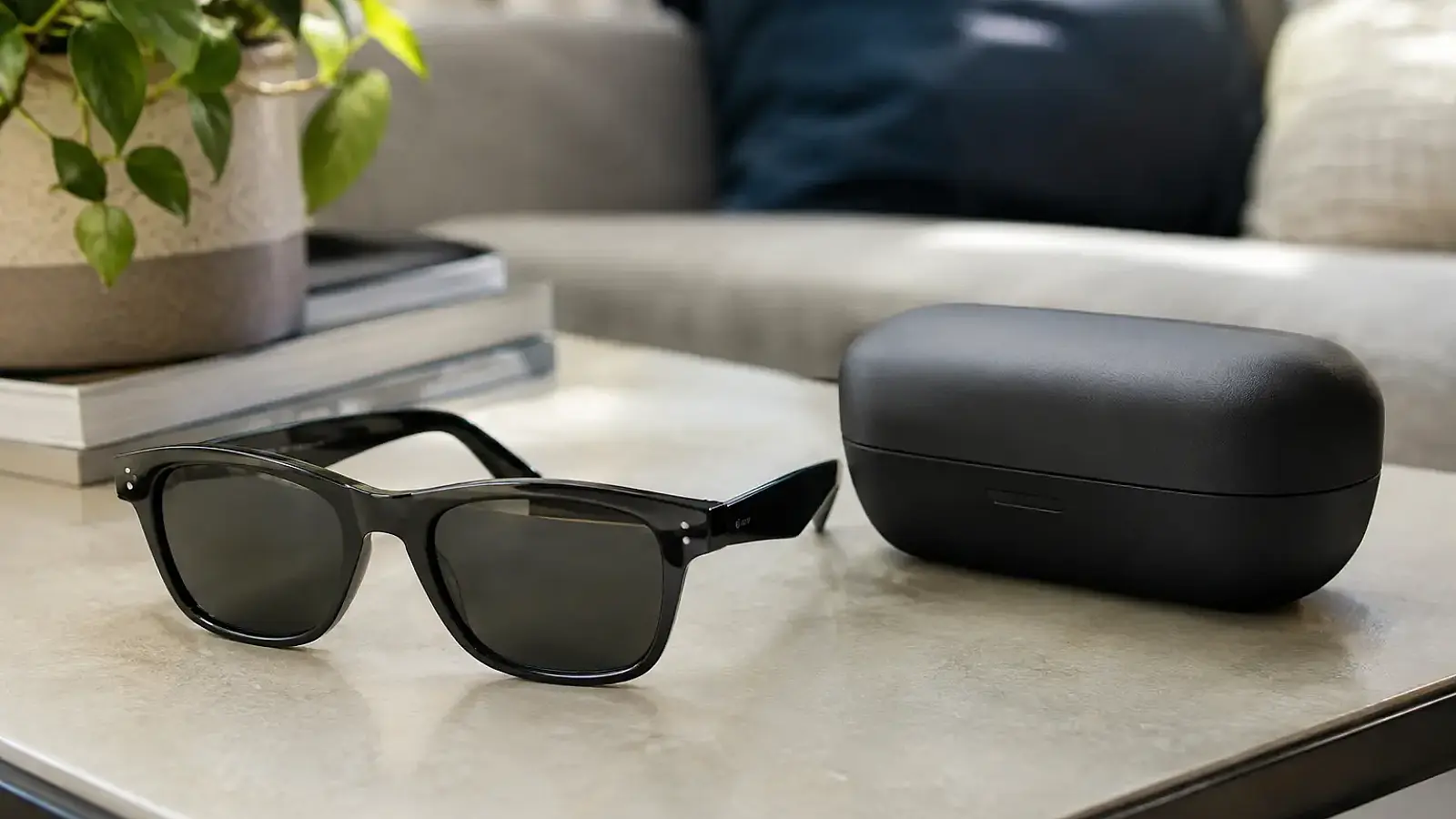
A new kind of glasses, without a camera
Meta is expanding its smart-glasses lineup with a product that leaves out a camera. Announced September 23, the Ray-Ban Meta Audio glasses put speakers, microphones and hands-free access to Meta’s AI assistant into a frame designed for listening and calls. Preorders start at $349 in the United States, with shipping scheduled for October 13.
The launch is a notable turn in wearable tech: Meta is betting that people may want glasses for everyday audio and AI assistance even when they don’t want to record photos or video. The company describes the new frames as its first audio-only glasses.
Source: Meta — about.fb.com/news/2026/09/introducing-ray-ban-meta-audio-gla...



Audio features and fit
Meta says the glasses weigh 43 grams and can play music and podcasts, handle calls, and connect users to its voice assistant. Battery life is rated at up to 12 hours on a charge, with the included case providing up to 48 additional hours. Those figures are company estimates, not independent test results.
The glasses come in Clubmaster and Burbank designs, with 23 combinations of colors and lenses. Meta says the frames support a range of prescription lenses and include adjustable or swappable nose pads, professional-adjustable temple tips and overextension hinges.
Compared with camera-equipped smart glasses, the audio-only design offers a simpler proposition: wear speakers and microphones in a familiar-looking frame, without a camera capturing images. That distinction may appeal to people who want to listen or talk to an assistant while keeping their phone in a pocket. It also means the new model does not offer the hands-free photo and video features found in Meta’s camera-equipped glasses.
Source: Meta — about.fb.com/news/2026/09/introducing-ray-ban-meta-audio-gla...
Meta expands its glasses lineup
The announcement came alongside a broader push into Meta AI glasses. Meta said its wider collection will span more than 100 options across Ray-Ban, Oakley and Meta-branded frames by the end of the year. The company also introduced the Ray-Ban Meta Gen 3, a camera-equipped model priced from $449.
Meta says Gen 3 offers up to nine hours of battery life, a 12-megapixel camera and 3K Ultra HD video recording. A six-microphone array is designed to reduce background noise, and the company says the frames can cut more than 90% of it. The model is available now, according to Meta.
The company also tied the new products to Muse AI agent, its personal assistant for glasses. Meta says Muse is intended to help users manage tasks and turn longer-term goals into plans through hands-free interactions. The announcement describes the planned experience; it does not establish how well the assistant will perform in everyday use.
The products are part of Meta’s EssilorLuxottica partnership, the collaboration behind the company’s Ray-Ban glasses. Together, the announcements show Meta widening the category beyond camera-equipped frames, while continuing to position voice-based AI as a key reason to wear connected glasses.
Source: Meta — about.fb.com/news/2026/09/introducing-ray-ban-meta-audio-gla...
Price and practicality will matter
At $349, the audio-only model sits below the new camera-equipped Ray-Ban Meta Gen 3, which starts at $449. The price difference gives shoppers a straightforward choice: pay less for audio and assistant features, or spend more for a built-in camera and video capture.
Battery life, comfort and sound quality will determine whether the audio-only design feels useful beyond a product demonstration. Meta’s advertised 12-hour listening estimate and lightweight 43-gram frame make a clear pitch for all-day wear, but real-world results can vary with use. Prescription availability and the choice of frame styles may also shape who finds the product practical.
The timing reflects a broader effort by technology companies to make AI accessible through devices people already wear. Meta’s approach is to place the interaction in glasses rather than require users to pick up a phone. Whether customers welcome an assistant in their frames—or prefer the simpler function of regular headphones—will become clearer once the product ships in October.

For now, the key takeaway is that Meta is treating smart glasses as a family of products, not a single camera gadget. The new audio-only option lowers the entry price for its connected eyewear and tests whether hands-free listening and AI can stand on their own.
Source: Meta — about.fb.com/news/2026/09/introducing-ray-ban-meta-audio-gla...










Comments
0 comment