



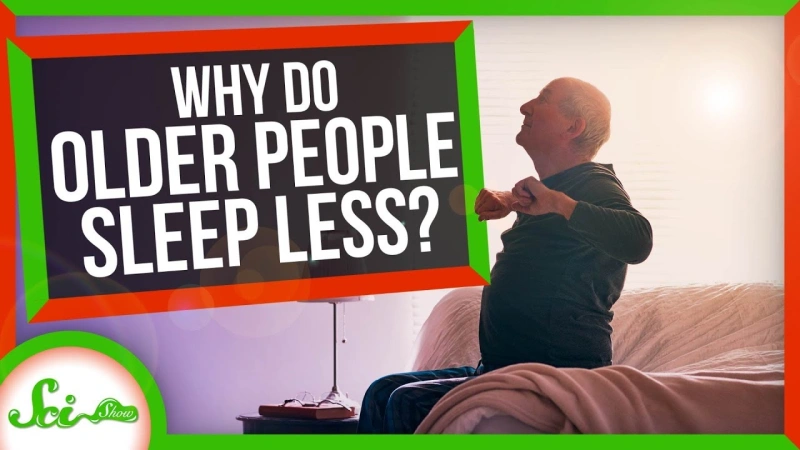
The Body Clock Shifts Earlier with Age
Your body as a human being has its own internal clock. You might try to sleep, wake up, and go on your day based on the schedule you set, but unless it aligns with this natural mechanism, you will often find it harder to follow your timetable. This clock is referred to as the circadian rhythm.
It naturally tells your body when to sleep and when to wake up. It also changes as we grow older. If you have observed, kids usually will wake up earlier, teens’ schedules are all over the place, but they tend to sleep later, before ultimately going back to sleeping early and waking up early as older adults.
Of course, this is just one general scenario; not all people will fit into this description. However, the point is that we have a circadian rhythm, a natural clock that our bodies follow. But it still begs the questions, why does it change as we grow older, and how does it affect our sleeping patterns?
Read more: Sleep Foundation
Sleep Becomes Lighter and More Broken Up
The changes in sleep are not just about the timing of the body; it is also about the quality of the sleep itself. One study published in PubMed Central found that as people grow older, the deep sleep they have decreases significantly. This is accompanied by an increase in lighter sleep.
In simpler words, their sleep is less restful and could easily be interrupted, either by natural factors like sunlight in the morning, or disturbance in their surroundings like noises. Scientists also found that our sleep as we get older will be more broken up with frequent awakenings during the night.
Read more: Ohayon et al.
Hormones, Brain Changes, and Lights Affect Sleep

Melatonin is one of the most important hormones for our sleeping patterns and circadian rhythm. It helps signal when it is time to sleep or wake up. However, as people grow older, their bodies produce less of this crucial hormone. With less melatonin in the body, older people are more easily disturbed in their sleep, even from small environmental noises or bodily discomfort.
One thing we have to note is that the brain naturally responds more slowly to signals as we get older. So, in some cases, even if our circadian rhythm signals it is time to sleep or wake up, the brain may not be able to follow these schedules as precisely.
Another crucial biological factor is our eyes, as the brain uses them to perceive light, which plays a big part in our circadian rhythm. It makes sense as we evolve as human beings; we didn’t always have alarm clocks. The sun rising and setting was the main indicator of our natural clocks. So, with less light reaching the eye as we age, it may confuse our bodies and make recognizing day and night harder.
Keep in mind that these are oversimplifications to try and explain the phenomena happening that answer the original question of “Why Do People Tend to Wake Up Earlier as They Age?”. Some sources will delve deeper into these factors if you are curious about understanding each of them further.
Read more: Harvard
Sleep Disorders and Lifestyle Habits
The majority of the factors we presented are often based on someone being healthy in all aspects of their life. However, some disorders could affect the circadian rhythm, including lifestyle habits that are damaging to our bodies in nature.
We will not dive deep into this part as it is beyond the scope of the article, but here are a few of the most important things that will affect someone’s sleep: Uncontrollable urge to pee multiple times at night, less physical activity, less exposure to daylight, sleep apnea, and anxiety.
Author's Final Thoughts
So, why do older people tend to wake up earlier as they age? The answer is that it is a mix of changes in our body that naturally occur as one grows older, such as changes in the body clock, an increase in lighter sleep, lower crucial hormone levels, slower brain responses, and lifestyle shifts.
The good news is that more often than not, these are natural and normal parts of aging and not necessarily a sign of a problem. Just another reminder and disclaimer before we end this article, it is for informational and educational purposes only and is not a substitute for professional medical advice. If sleep changes are causing problems or impacting daily life, please consult a qualified healthcare provider.

Get start to make great community with Buzzy. TODAY! Purchase Now!













Comments
0 comment